From wearable data to a shared view of recovery.
Training intensity is only part of an athlete’s preparation. Sleep, recovery and the response to recent workload provide essential context for the next session. The Blue Box integrated the Recovery engine into EquipoArg, the official app of ENARD, Argentina’s National Entity for High-Performance Sports.
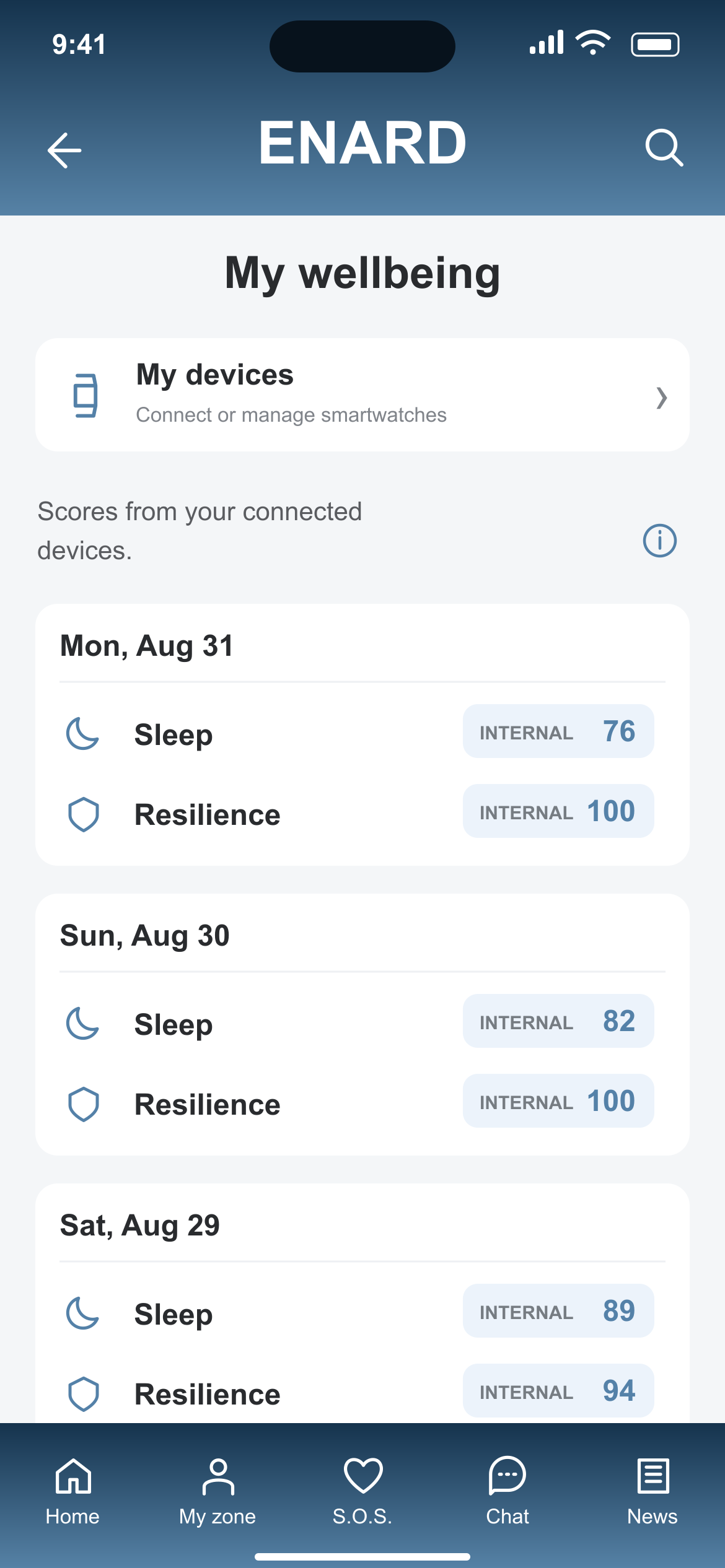
The integration brings physiological information from connected devices into one workflow for athletes and coaching teams. Athletes access it in “Mi bienestar” (My Wellbeing), while the Recovery engine processes the underlying data.
100+ athletes and 10+ coaches.
The implementation reached 100 athletes and 10 coaches in its first 15 days.
This initial reach shows athletes and coaches joining the same Recovery implementation within EquipoArg.
Connect the devices athletes already use.
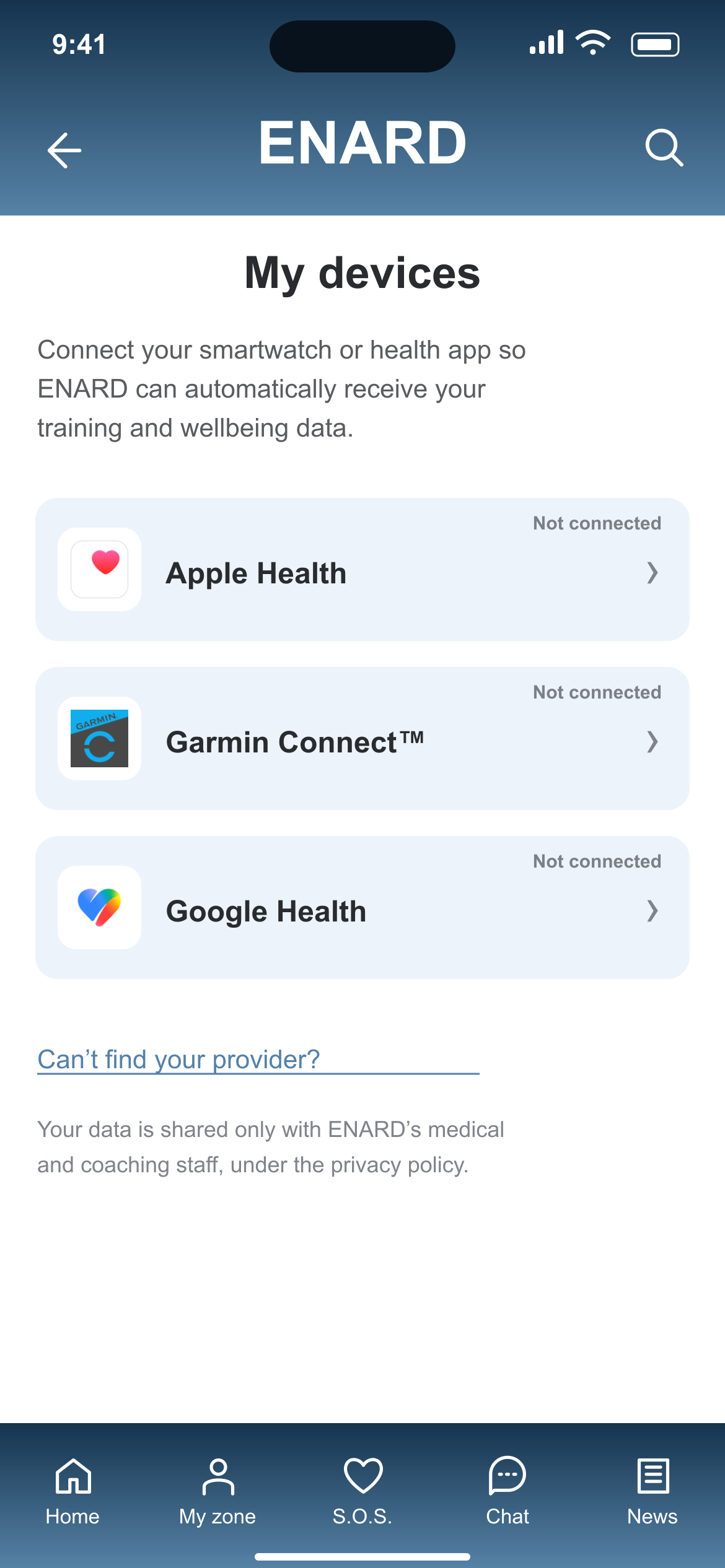
The integration supports several health ecosystems so athletes can connect the devices they use in their daily routines. The published implementation includes:
Apple Health · iOS
Metrics recorded through Apple Watch and devices compatible with the Apple health ecosystem.
Google Health Connect · Android
Health and activity information consolidated through the Android ecosystem.
Garmin Connect - iOS and Android
A direct connection to Garmin multisport devices used across training and competition.
Samsung Health · Android
Health and activity information from Samsung Health on Android.
The “Mi bienestar” module syncs information in the background. Athletes can manage their connections in “Mis dispositivos” (My Devices).
Turn signals into sleep and resilience scores.
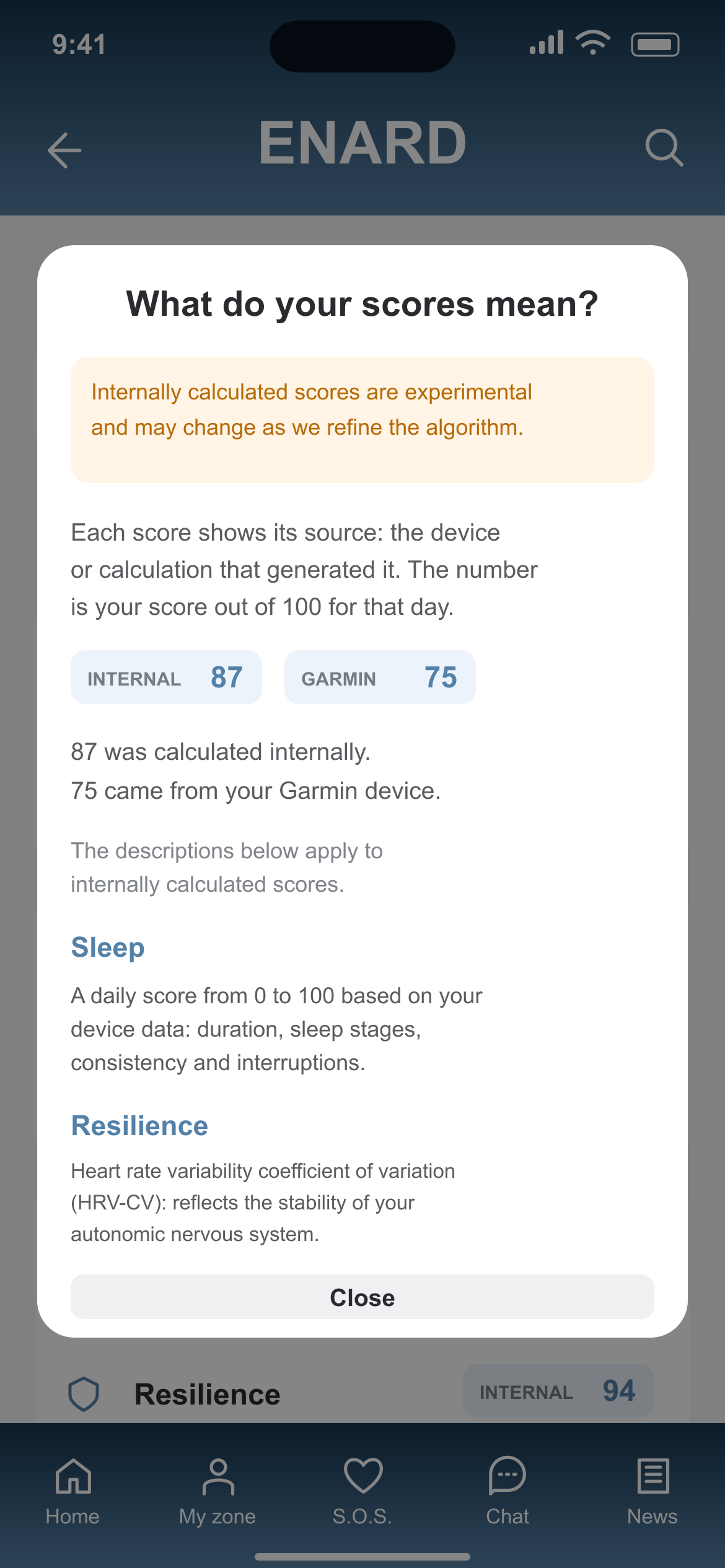
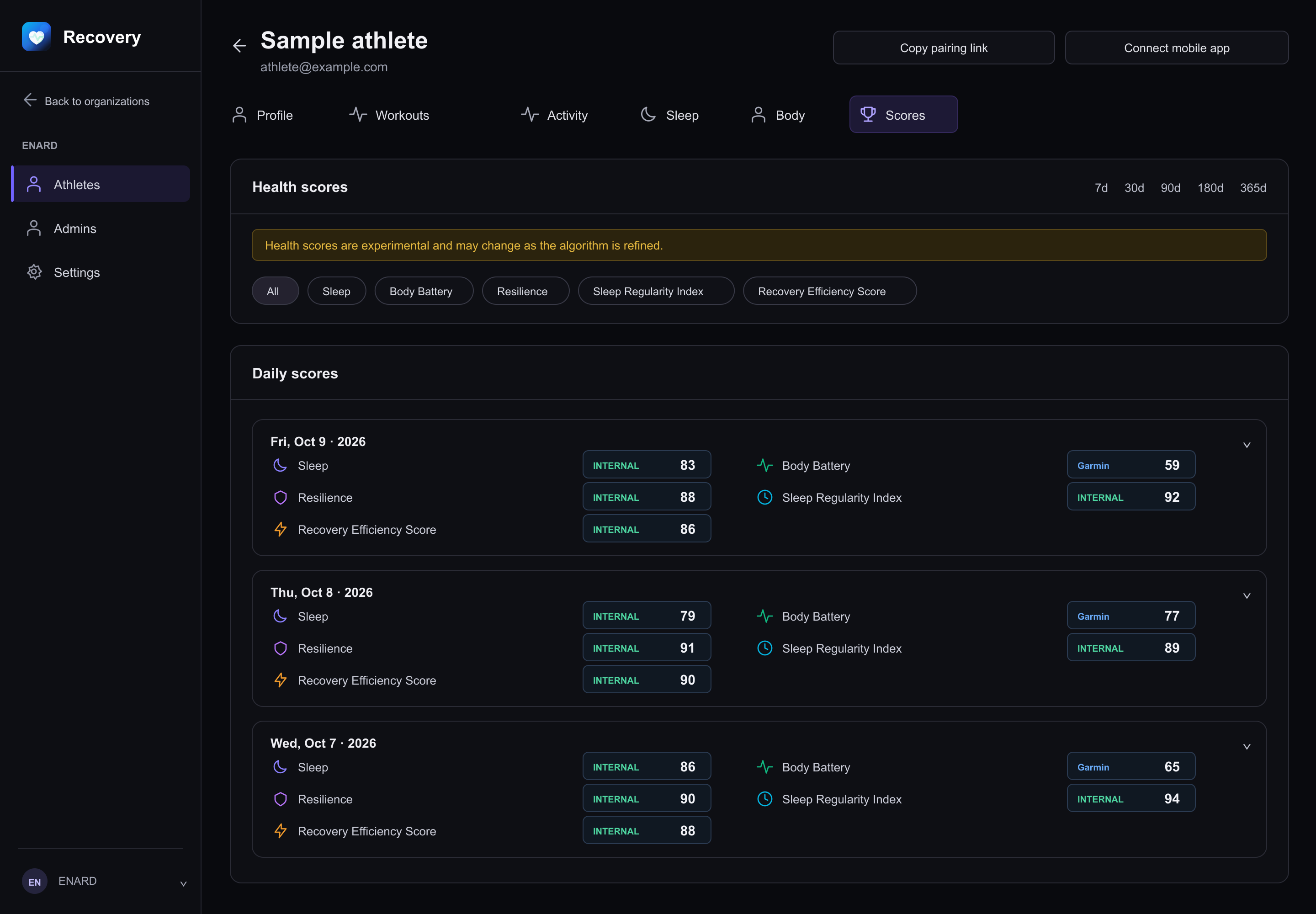
Recovery processes biometric information into scores and sleep statistics that help athletes and coaches interpret recovery, daily routines and changes over time:
Sleep score
Uses sleep duration, continuity and stages to assess the contribution of sleep to recovery.
Resilience score
Considers heart rate variability (HRV), accumulated stress and the body’s response to previous training loads.
Sleep Consistency
Compares bedtime with recent sleep history to assess how closely an athlete follows their usual routine.
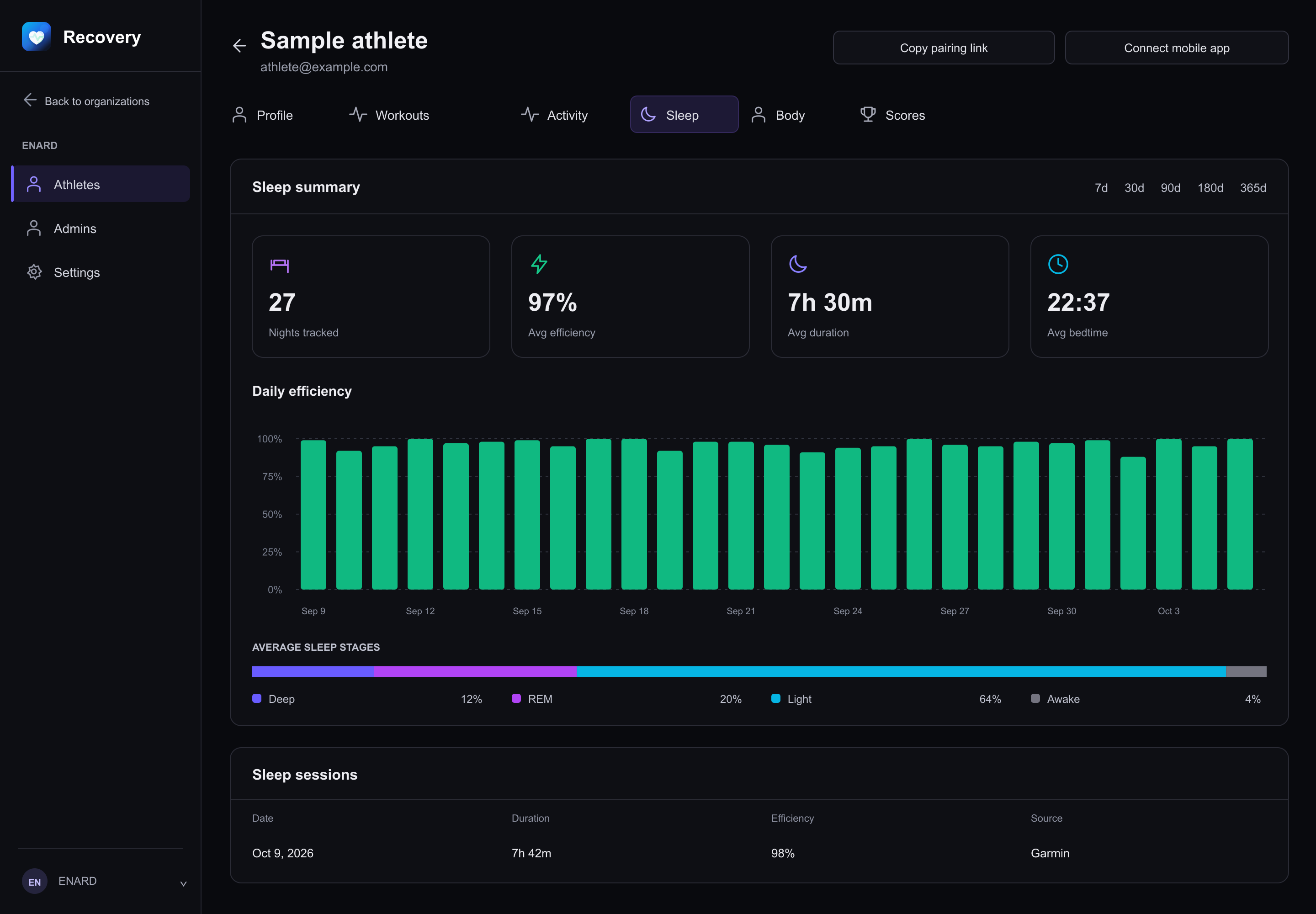
Sleep Statistics
Summarizes sleep timing, duration, efficiency, stages and interruptions to reveal typical patterns and changes over time.
Sleep Regularity Index
Compares sleep–wake patterns on consecutive days to assess the regularity of an athlete’s daily routine.
Recovery Efficiency Score
Combines heart rate, HRV and breathing recovery during the first three minutes after exercise. Its calculation still requires validation.
Read together, these indicators help teams notice fatigue patterns and changes over time, bringing more context to conversations about workload and recovery.
Give coaching teams a clearer picture.
ENARD coaching teams can consult their athletes’ recovery status through a dashboard. That shared information supports decisions about preparation and the next training session:
Adapt training load
Consider the day’s recovery level when setting session volume and intensity.
Notice sustained changes
Follow declines in sleep or resilience and discuss them with the athlete and support staff.
Support preparation with data
Use physiological indicators alongside the team’s knowledge of each athlete when planning training.
The aim is to make recovery information useful in the everyday work of athletes, coaches and support teams.
A recovery engine within an existing product.
EquipoArg demonstrates how Recovery can connect devices, process physiological data and surface useful information inside a platform athletes already use. The app provides the athlete experience; Recovery supplies the processing engine behind the wellbeing module.
For sports organizations and partner platforms, this case illustrates an implementation approach: connect the data sources, interpret the signals and make the results available to the people planning training.
Original article · September 9, 2026
Read the original article ↗